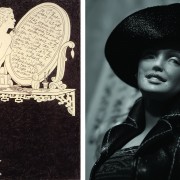
 AMERICAN BEAUTY
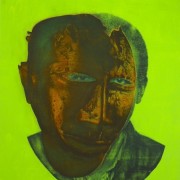 Ancestral Spirits, African-American Portraits
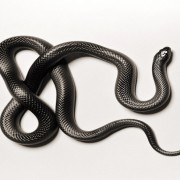 Bestiary
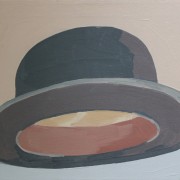 Crossing Houston
 Essential Elements:: IDEAS CITY
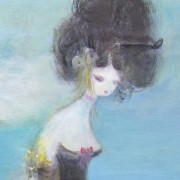 Femmé Fatale
  KLUGHAUS – ‘PALINGENESIS’
 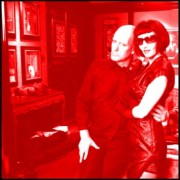 Mona Mur & En Esch ›
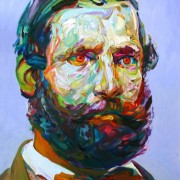 Past the Pillars of Hercules
 Round Hole, Square Peg
 SUBurban
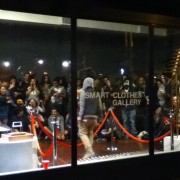 The Mic is Open
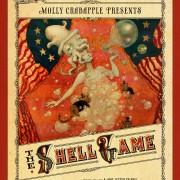 The Shell Game – Molly Crabapple
  The Talking Cure
 THRILLS
 Treasure
SMART CLOTHES GALLERY
Circa 2015
Paul Bridgewater opened the SMART CLOTHES GALLERY in Manhattan’s Lower East Side.
This was the gallery's website.
Content is from the site's 2015 archived pages.
The gallery is now closed.
SMART CLOTHES GALLERY
154 Stanton St.
New York, NY 10002
Paul Bridgewater
Kooky… Kinky… Genius…
Having spent more than half of his life in the visual arts, Paul Bridgewater is at it again, recently opening SMART CLOTHES GALLERY in Manhattan’s Lower East Side.
As Co- Founder & Director of Hardart Gallery, Washington, DC in 1973, Paul continued to consult for the decade they existed. After moving to NY, he opened Bridgewater Gallery in 1984 and saw it through many transitions, as Bridgewater/Lustberg, Bridgewater/Lustberg & Blumenfeld, Bridgewater Fine Arts to its’ current revival as Smart Clothes Gallery today.
Over the past three decades he has been a Board Member and/or consultant to: The Museum of Temporary Art, Washington, DC , The YWCA Craft Students League, NYC , The Watershed Foundation for Ceramic Art, Saco, ME., Meta Museum, Blackmountain College, Hillsborough, NC and Artplace Studio Foundation, NYC.
In this time he has curated over 450 exhibitions including “Spark of Genius” for The General Electric Research and Development Center, Schenectady, NY and consulted on such exhibits as “Temples of the Yoruba”, Photographs by Phyllis Galembo at The Schoenburg Center for Black Studies; Rockefeller Foundation, NYC and “Paint By Number” at The Smithsonian Institution, American History Museum, Wash., DC; “American Folk” for CBS Cable and The Robert Lynch Collection of North Carolina Folk Art, Wesleyan College, Rocky Mount, NC. He currently lives in the East Village of New York City.
~~~
Editor's Note: Opening up a gallery in NYC takes a lot of chutzpah. I applaud Paul Bridgewater's audacity. I live on the lower East side of Manhattan and love strolling the streets, wandering into the shops and galleries that open and then eventually close. I was hopeful for the SMART CLOTHES GALLERY when it first opened. The artists and shows were impressive.
I loved the Logan Hicks: Love Never Saved Anything show and told my friends to check it out. One of those friends was visiting from Louisiana, where he's a partner in a private practice of Louisiana maritime lawyers helping injured seamen and maritime workers receive appropriate compensation for medical and other expenses that result from accidents on board vessel, on the docks, or on rigs. He and a partner in the law firm were hugely impressed with the Hicks show - probably because of the nautical themes running through the work.
And finally, my best friend is married to the former Queens Assistant District Attorney, now the renown NYC corporate lawyer Benjamin Randall Pred. He's pretty straight laced and has to dress conservatively for his work, so when he heard the name of this gallery, his initial response was he would be unlikely to find clothes he could wear to work here. And Ben is correct since there are no clothes here, at least for the current show.
~~~
CURRENT SHOW
Logan Hicks: Love Never Saved Anything
PMM Art Projects announces a special pop-up exhibition of New York-based artist, Logan Hicks, featuring nautical-based stencil paintings as well as photographs from his infamous urban explorations. On view at 154 Stanton Street (Lower East Side, New York) from March 7 through 19, 2014, Love Never Saved Anything is Logan’s second solo show with PMM Art Projects and his most ambitious work to date.
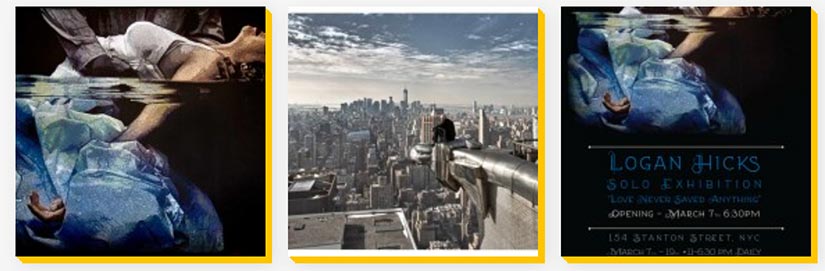
While much of Logan’s work deals with the often analytical, highly contemplative view of the urban environment, the paintings in Love Never Saved Anything were born out of the artist’s experiences and personal set backs this past year. The challenges led him to explore underwater photography as inspiration for these paintings. Logan explains, “The drifting, the weightlessness was how I felt internally. It seemed like the perfect way to capture what I was going through - adrift in a sea of uncertainty.” Having lived near the sea all his life, maritime themes have always been a unique influence for him, but are more explicit in this new body of work. Both haunting and elegant, his new paintings incorporate references from nautical superstitions and sailor traditions and showcase the range of perspectives from which the artist sees his environment.
Logan is well-known for his work as a street artist and urban explorer – seeking out and discovering places that few have seen. From abandoned subway stations to dilapidated buildings, a series of new photographs will be showcased depicting forbidden areas of the urban environment and unique vantage points. While the nautical-based paintings inform the viewer of the self-discovery process through internal investigation, this photographic body of work continues the artist’s external exploration and will be on view on the bottom floor of the gallery.
ABOUT LOGAN HICKS
Logan Hicks is a New York-based artist whose work explores the dynamics of the urban environment through photography, stencil paintings and street art. Using photographs taken during his international travels as a point of departure, he creates intricate multi-layered stencils and aerosol spray to build the image. The labor-intensive process sometimes involves as many as 15 different stencil layers and can take up to a month to complete each work. Logan was one of two artists personally selected by Banksy to represent the USA at the 2008 Cans Festival in London. He has twice shown at the prestigious NuArt festival in Stavanger, Norway. His work is on permanent display at the late real estate developer Tony Goldman's Wynwood Walls arts compound in Miami as well as the Goldman Collection in New York. He has shown in nearly 20 countries throughout his career including Melbourne, Hong Kong, Oslo, Paris and London. His first exhibition with PMM Art Projects was in 2013 at Los Angeles Contemporary Exhibitions (LACE) in Los Angeles. Upcoming 2014 international exhibitions include shows in Istanbul, Turkey, and Basel, Switzerland.
ABOUT PMM ART PROJECTS
Founded by Pat Magnarella, a highly respected music manager along with Roger Klein, a former major record label Artists & Repertoire person, PMM Art Projects is conceived of as a “disruptive art business model” in which they neither strived to be “agents” or gallerists, but instead work to insure that their artists would be protected, nurtured, and recognized - both within, and beyond - the art world. PMM Art Projects has presented acclaimed exhibitions in Los Angeles, New York, and London, and works with a number of internationally-known artists including Logan Hicks, Charming Baker, Dan Baldwin, D*Face, Miss Bugs, and Brett Amory, among others.
Did you miss the Eye Memes exhibit? The innovative and provocative display of Jonas' weird take on glasses (eyeglasses) and other forms of eyewear. More than 50 sculptures grace the Poco Gallery with ingenious takes on vision enhancement, from monocles to virtual reality. But the focus was on typical glasses, including a hugely informative history and complete dissertation on all kind of glasses facts. Nylon glasses? Flexible glasses? Look-behind-you glasses? Kaleidoscope glasses? All of these and more are on display.
RECEPTION
March 7, 2014, 6:30 PM
SHOW DATES
March 7 - 19, 2014
FEATURING
Logan Hicks
+++
Artists
Bill Miller
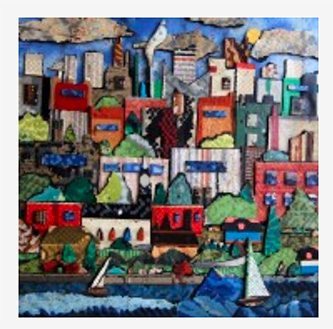
Bill Miller is a collage artist who has been using vintage linoleum flooring as his medium for almost 20 years, and currently lives outside of Woodstock in the Hudson Valley, north of NYC. Linoleum was the ultimate interior medium, present in all aspects of 20th century life from Grandma’s kitchen to the corner drug store and neighborhood school. Miller’s innovative work is recognized for pictorial assemblages that rely only on the flooring’s found surface, with no added paint, to render his subjects. Miller’s images range from bucolic landscapes to surrealistic, fiercely political pieces that draw on iconic news and pop culture images that have informed society’s common memory. His unexpected use of familiar patterns taps into the medium’s nostalgic qualities, imparting a sense of personal history and rediscovery within each piece.
Born 1962 in Cleveland, OH, Miller studied at the Art Institute of Pittsburgh, PA. After earning his degree, he moved to Denver, CO in 1982 where he studied art at Denver University and Colorado State University, concentrating on painting and printmaking. In 1988, Miller returned to Pittsburgh to become art director of In Pittsburgh Newsweekly (local Village Voice-type publication.) He continued to paint, and went on to be a founding member of Pittsburgh’s Industrial Arts Co-op which sought a collective artistic response to the devastating impact of decaying industrial infrastructure on surrounding communities. Together they constructed immense sculptures inside abandoned industrial buildings from materials found on-site. While scavenging, Miller was drawn to scraps of vintage linoleum, and compulsively began collecting what was to become his new pallet and principle medium for almost 20 years.
Miller’s work has long been shaped by the tragic impact of industrialization. Both his parents were from West Virginia coal mining families (his use of linoleum’s flat patterns can be interpreted as an extension of local quilting traditions, a long time avocation of his sister.) His grandfather was killed in the mines when Miller was a child. His parents raised Bill and his sister in the industrial center of Cleveland OH, where his father too lost his life in an auto factory when Miller was a teen. Miller moved to Pittsburgh as a young adult just as the steel industry collapsed, decimating long time communities and creating a rust belt of crumbling towns and massive structures.
Miller moved to the NYC area in 1998, working at The Village Voice and showing his work in a series of one-man exhibits in the Chelsea neighborhood of Manhattan. In 2000, he relocated to the Washington DC area to focus full time on his art.
Miller was honored with a retrospective exhibit at the Pittsburgh Center for the Arts in 2007. In 2010, he was chosen to create the cover image for the Frank Zappa CD Congress Shall Make No Law, issued to mark the 25th anniversary of Zappa’s anti-censorship testimony on Capitol Hill to support artistic freedom of expression.
This year, Miller was chosen to create the artwork for the 13th annual Woodstock Film Festival, joining notable artists Peter Max, Milton Glaser and Bill Plimpton who were previously selected for this honor. He is also one of only two Americans accepted into Drap Art ‘12, a prestigious juried exhibition of international recycled art held in Barcelona, beginning late September.
Miller’s work has been widely exhibited including solo shows in NYC, LA, Philadelphia, Seattle, New Orleans, Austin, San Diego, Pittsburgh, Columbus, Baltimore and Woodstock, NY. His work has been presented at Art Basal in Miami, the International Sculpture Objects & Functional Art Fair (SOFA) in Chicago, Gallery Maison Bertaux in London and Outsiders Outside Art Fair in Harbert Michigan. He has been profiled on by the National Geographic Channel and WQED TV (public television), and featured in prominent publications including New York Times, LA Times, Chicago Tribune, NY Daily News, Pittsburgh Magazine, HOME Magazine and the coffee table book Found Object Art.
+++
PAST SHOWS

PRESS
Leah Oates Talks Shop with Paul Bridgewater of Smart Clothes Gallery
Recent work by Salvador Muñoz as part of the exhibition Round Hole, Square Peg at Smart Clothes Gallery.
Leah Oates: What is your family background.
Paul Bridgewater: My family is ‘Merican, ‘Merican, ‘Merican!…Here a long time! (Southern accent) English, French, Black, Italian, German, Mexican and probably a lot of other things…muts!
LO: Did you always know you would be a gallerist?
PB: Me and my friends were artists. They were clueless, so I started organizing events to showcase us. Then an artist I told had little talent put a curse on me and here we are.
LO: You have been a gallerist in NYC in the hey day of the NY art scene. What are your impressions of that time and was it truly better then?
PB: They were better times in the fact that anybody could open a gallery … like the old movie’s, “My father has a barn, let’s do a play.” And actually people bought things just because they were beautiful and you wanted art to improve your house. Now they buy them because “they’re important”—or an investment. Humbug!
LO: You currently have a show open called Round Hole, Square Peg which explores aspects of the LGBT community. Please tell us more about Round Hole, Square Peg and what kind of responses is the show getting?
PB: The show is meant to explore new relationships…new ways of being comfortable in your skin. We challenged artists to redefine Queer intimacy, what it was like coming out or living in hiding or finding you were in the wrong skin. We’ve mostly gotten extraordinary support from everyone, saying it is one of the most beautiful shows they’ve seen on the subject.
We’ve also gotten a few detractors, who screamed and said they hated us.
We actually had a large bag suddenly appear right after someone said they were going to fix us and we thought it was a bomb. Luckily, it was a bag of books.
LO: Please tell us about the artists that you represent i.e. what their work is about, their media
etc., and how you discovered their work.
PB: Our official mantra is “Kooky, Kinky, Genius!” So, if it’s something that’s wildly interesting, uses the medium in a different way, shows you something you’ve never seen before, and makes you think innumerable times about what and why it is—you’re probably speaking our language.
LO: What does it take to be a successful gallerist and how do you select your artists?
PB: The first question I asked when teaching my course The Art Business…”How do you make a small fortune in the Art Business? Start with a big one.” I think I addressed my process for selecting artists in the last question.
LO: What advice would you give artists who want to approach galleries for shows?
PB: Visit galleries and find your fit. Go back and try to make yourself known to the staff. Then ask their procedure for submissions. Gone are the days of unsolicited slides.
LO: Do you think galleries look for innovation or follow trends in NYC?
PB: I can only hope galleries are looking for innovations. Following trends is much like wearing labels … great for the general public, but not what the people who are supposed to be defining culture should concern themselves with.
LO: What projects and show do you have coming up in the future at Smart Clothes Gallery?
PB: My next show SUBurban will be very exciting and is trying to show how urban planning isn’t about making cities better and how the sprawl of cities and suburbs is out of control and destroying our sense of self, individuality, and environment.
And “Not Clowning” takes a look at The Clown in all of their facets, from the simple and innocent Pierrot to the absolutely scary clown from Cindy Sherman to John Wayne Gacy.
+++
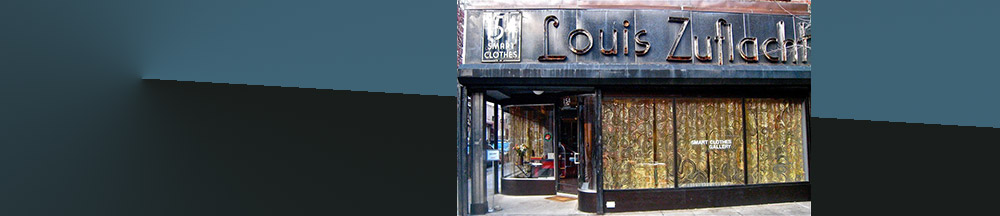
More Background On SmartClothesGallery.com
SmartClothesGallery.com served as the official online presence of Smart Clothes Gallery, a contemporary art gallery that operated in Manhattan’s Lower East Side during the early 2010s. Despite its unconventional name, the gallery was not a fashion space or clothing retailer. Instead, it functioned as a platform for contemporary visual art, emphasizing innovation, experimentation, and intellectually provocative exhibitions. Today, the gallery is closed, and the website survives primarily through archived versions, offering a valuable snapshot of a distinct moment in New York City’s independent art scene.
This article provides a comprehensive overview of SmartClothesGallery.com and the gallery it represented, examining its ownership, mission, exhibitions, audience, cultural significance, and lasting legacy.
Origins and Ownership
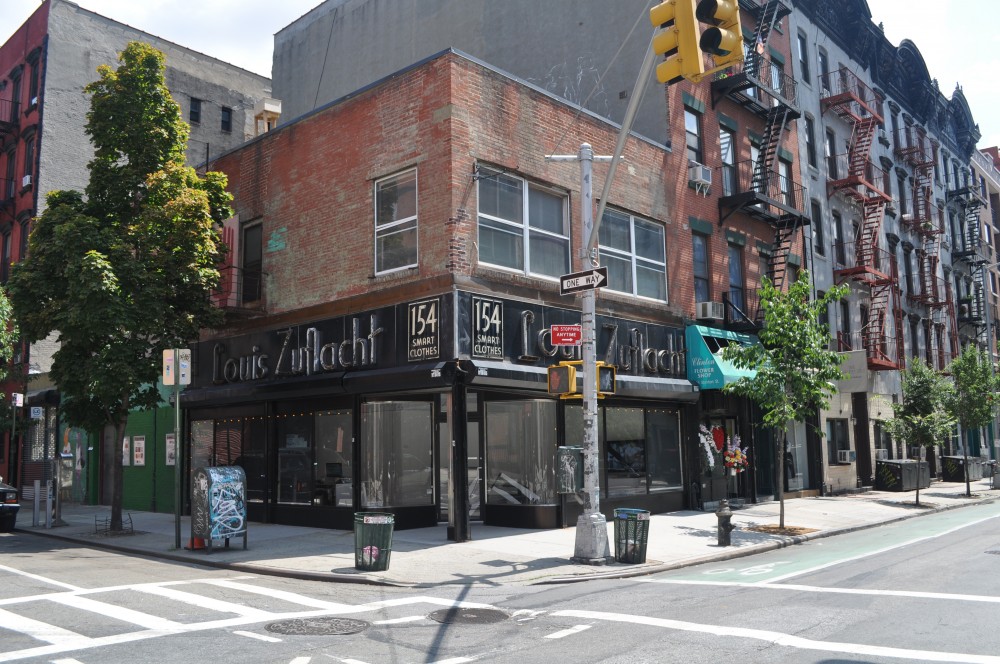
Smart Clothes Gallery was founded and directed by Paul Bridgewater, a veteran gallerist with decades of experience in the American art world. Bridgewater opened the gallery at 154 Stanton Street, New York, NY 10002, placing it firmly within the historic and culturally dense Lower East Side neighborhood.
Bridgewater’s career in the visual arts began long before Smart Clothes Gallery. He was a co-founder and director of an influential Washington, DC gallery in the 1970s and later established several iterations of Bridgewater Gallery in New York City beginning in the 1980s. Over the course of his career, he curated or consulted on hundreds of exhibitions and worked with museums, foundations, and educational institutions across the United States.
Smart Clothes Gallery represented a continuation—and reinvention—of Bridgewater’s lifelong engagement with art. Rather than adopting a purely commercial model, the gallery reflected his belief in art as a vehicle for cultural exploration, social commentary, and personal expression.
Location and Physical Context
The gallery’s Lower East Side location was central to its identity. Historically, the neighborhood has been associated with artistic experimentation, immigrant communities, grassroots culture, and countercultural movements. By the early 2010s, the area remained a hub for small galleries, pop-up exhibitions, and artist-run spaces, even as rising rents and rapid development began reshaping the landscape.
Smart Clothes Gallery occupied a street-level space that encouraged walk-in visitors, casual engagement, and interaction with the surrounding community. Its proximity to other galleries, music venues, cafes, and artist studios allowed it to function as part of a larger cultural ecosystem rather than an isolated destination.
Curatorial Philosophy and Goals
The guiding philosophy of Smart Clothes Gallery was encapsulated in a phrase often associated with Paul Bridgewater: “Kooky, Kinky, Genius.” This informal mantra reflected the gallery’s commitment to work that was unconventional, emotionally resonant, and intellectually stimulating.
Rather than following market trends or established hierarchies, the gallery sought artists who:
-
Used materials or processes in unexpected ways
-
Explored social, cultural, or psychological themes
-
Challenged viewers’ assumptions about art, identity, or environment
-
Occupied spaces between fine art, street culture, design, and activism
The gallery’s goal was not simply to sell artwork, but to foster dialogue, curiosity, and reflection. Exhibitions were often thematic, encouraging viewers to engage deeply with ideas rather than passively consume visual content.
Exhibitions and Programming
During its active years, Smart Clothes Gallery presented a diverse range of exhibitions, featuring both solo and group shows. These exhibitions spanned multiple media, including painting, photography, collage, sculpture, stencil work, and mixed media installations.
Notable Exhibitions
One of the most widely discussed exhibitions was “Love Never Saved Anything”, a solo show by New York–based artist Logan Hicks. The exhibition explored themes of vulnerability, uncertainty, and personal struggle through nautical imagery, underwater photography, and intricate stencil paintings. The work reflected both internal emotional states and external urban exploration, aligning closely with the gallery’s mission of thoughtful, layered storytelling.
Other exhibitions included shows with titles such as American Beauty, Ancestral Spirits, Bestiary, Femmé Fatale, The Talking Cure, Thrills, and Treasure. These titles suggest a wide conceptual range, touching on identity, mythology, psychology, gender, social structures, and cultural memory.
The gallery also hosted exhibitions that addressed urban life, suburban expansion, environmental concerns, and marginalized experiences, reinforcing its role as a space for socially aware art.
Artists and Representation
Smart Clothes Gallery worked with emerging and mid-career artists from New York and beyond. Rather than maintaining a rigid roster, the gallery collaborated with artists whose work aligned with specific exhibition themes or curatorial inquiries.
Artists associated with the gallery often had backgrounds in street art, photography, alternative materials, or interdisciplinary practices. Some went on to gain broader recognition through international exhibitions, festivals, and institutional collections.
The gallery’s willingness to support artists experimenting outside traditional commercial expectations made it particularly appealing to creatives seeking thoughtful presentation rather than purely market-driven exposure.
Audience and Community Engagement
The gallery’s audience consisted primarily of:
-
Local Lower East Side residents
-
Artists and creatives
-
Art students and educators
-
Visitors interested in contemporary and experimental art
Openings and receptions were social events that brought together a mix of longtime New Yorkers, visiting art professionals, and curious passersby. The approachable scale of the gallery made it welcoming to audiences who might feel intimidated by larger institutions.
While Smart Clothes Gallery was not a mass-market destination, it cultivated a loyal following within the local art community. Visitors often described the space as intimate, surprising, and intellectually engaging.
Reviews and Critical Reception
Smart Clothes Gallery received positive attention from local arts listings, cultural guides, and independent blogs. Critics and visitors alike noted the gallery’s commitment to thought-provoking content and its refusal to conform to predictable exhibition formulas.
Rather than emphasizing prestige or investment value, commentary on the gallery often highlighted the sincerity of its programming and the depth of its curatorial intent. This approach resonated with audiences who valued art as a form of inquiry rather than status.
Cultural and Social Significance
Smart Clothes Gallery contributed meaningfully to the cultural fabric of the Lower East Side during a transitional period for New York’s independent art spaces. As rising costs and commercialization placed pressure on small galleries, spaces like Smart Clothes Gallery represented resistance to homogenization.
The gallery also played a role in amplifying voices and themes that were underrepresented in mainstream art institutions, including explorations of sexuality, identity, urban decay, environmental anxiety, and psychological introspection.
By prioritizing experimentation and dialogue, Smart Clothes Gallery upheld a tradition of artist-driven, idea-centered exhibition making that has long defined New York’s alternative art scenes.
Closure and Afterlife of the Website
Like many independent galleries of its era, Smart Clothes Gallery eventually closed its physical doors. The reasons were never formally framed as a single cause, but broader economic pressures, rising rents, and shifts in the art market likely played significant roles.
After closure, SmartClothesGallery.com ceased regular updates and eventually went offline. However, archived versions of the site preserve exhibition descriptions, artist statements, and curatorial texts, allowing researchers and art enthusiasts to revisit the gallery’s work years later.
Legacy
Although Smart Clothes Gallery had a relatively brief lifespan, its impact endures through the artists it supported and the conversations it helped spark. The gallery stands as an example of how independent spaces can shape cultural discourse without relying on scale, prestige, or commercial dominance.
Paul Bridgewater’s broader career—and later documentary recognition—has further cemented the gallery’s place within the history of New York’s independent art ecosystem.
SmartClothesGallery.com now functions as a digital artifact, offering insight into a moment when experimentation, risk-taking, and intellectual curiosity defined a small but meaningful corner of Manhattan’s art world.
SmartClothesGallery.com